
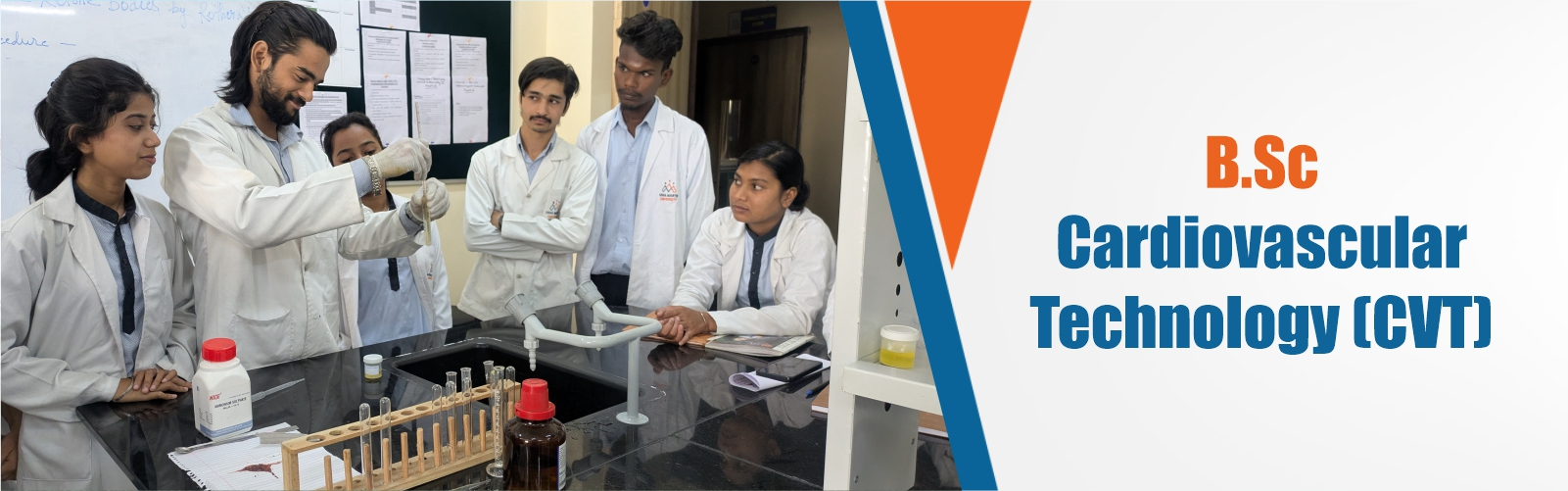
Admission Open 2026-27 | B.Sc. Cardiovascular Technology Program
Overview of the B.Sc. Cardiovascular Technology Program
The B.Sc. Cardiovascular Technology program is the bridge between advanced theoretical cardiology and full-time clinical practice. Aligned with the national guidelines for allied healthcare professions, this final year shifts students entirely out of the classroom and places them directly into high-intensity hospital environments. It is designed to cultivate professional readiness, turning students into critical members of cardiac care teams who can operate sophisticated diagnostic machinery and assist in life-saving interventional procedures.
Academics & Clinical Training
In the 4th year, standard lectures are replaced by a 12-month compulsory rotating clinical internship paired with professional readiness modules.
- Core Clinical Rotations: Interns spend dedicated months rotating through vital hospital units, including Cardiac Catheterization Labs (Cath Labs), Echocardiography (ECHO) suites, Electrocardiography (ECG/Holter/TMT) units, and Intensive Coronary Care Units (ICCU).
- Advanced Skills: Under direct medical supervision, students master advanced hemodynamic monitoring, assist in cardiac surgery/perfusion setups, help manage cardiac devices (like pacemakers), and support invasive percutaneous coronary interventions.
- Academic Components: Alongside hospital duties, the academic curriculum often requires completing a research dissertation or Capstone project and learning healthcare quality/accreditation standards.
- Evaluation: Passing the final year requires maintaining strict clinical attendance (typically 90% or higher) and clearing practical portfolio assessments.
Programme Overview
- We aim to provide strong foundational knowledge of cardiovascular sciences.
- We focus on developing practical skills in cardiac diagnostics and monitoring.
- We train students in ECG, echocardiography, and cardiac care technologies.
- We emphasize patient-centered healthcare practices and ethics.
- We encourage students to develop analytical and critical-thinking abilities.
- We provide clinical exposure through practical hospital-based training.
- We prepare students to assist cardiologists during diagnostic procedures.
- We focus on improving communication and teamwork skills in healthcare settings.
- We encourage research-oriented and evidence-based learning.
- We prepare students for higher education and specialized healthcare careers.
- We ensure students gain comprehensive knowledge of cardiovascular technology.
- We enable students to perform cardiac diagnostic procedures effectively.
- We prepare students to operate modern cardiovascular equipment confidently.
- We develop practical skills in patient monitoring and emergency support.
- We ensure students understand ethical healthcare and patient safety practices.
- We prepare students for careers in hospitals and cardiac care centers.
- We help students gain confidence through practical and clinical training.
- We enable students to support cardiologists during procedures and treatments.
- We prepare students for advanced studies and healthcare specialization.
- We empower students to contribute to quality patient care and healthcare services.
To transition into the 4th-year internship phase, students must satisfy specific prerequisite checkpoints:
- Academic Clearance: Students must have successfully completed and passed all university examinations and internal assessments from the first 3 years of the B.Sc. CVT curriculum.
- Initial 10+2 Benchmarks: Students must have originally entered the program with a Higher Secondary (10+2) background in Physics, Chemistry, and Biology (PCB/PCMB) with an institutional minimum pass percentage (usually 45%–50%).
- Credit/Attendance Completion: Fulfillment of the required credit framework and minimum attendance thresholds in clinical rotations during the first six semesters is mandatory.
- Human Anatomy & Physiology
- Cardiovascular Anatomy
- ECG & Cardiac Monitoring
- Echocardiography
- Cardiac Catheterization Techniques
- Cardiac Care Technology
- Medical Ethics & Patient Care
- Emergency & Critical Care Management
Students are trained through practical sessions, simulation-based learning, and clinical exposure.
The curriculum is designed according to modern healthcare industry requirements to ensure students are job-ready after completing the course.
Department of Paramedical & Allied Health Sciences at Usha Martin University
Healthcare is changing fast nowadays, and cardiovascular diseases have emerged as one of the major health issues in the entire world. In the studies conducted around the globe, heart problems are seen to account for almost 32 percent of all the deaths recorded. Cardiovascular healthcare has thus emerged as one of the crucial areas in contemporary healthcare.
With more and more hospitals offering increased cardiac care facilities, there has been an increased demand for skilled cardiovascular technologists. The B.Sc. Cardiovascular Technology (CVT) course at Usha Martin University will train you for jobs in the realm of cardiac health, diagnoses, and treatment.
Usha Martin University’s Department of Paramedical & Allied Health Sciences caters to developing skilled healthcare providers that are able to assist doctors and cardiologists in diagnosis and treatment of cardiac ailments.
The curriculum provides students with an insight into the anatomy of the heart, cardiovascular disease, imaging studies, ECG, echocardiography, cardiac catheterization, and patient monitoring systems. Both theory and practical exposure at laboratories, hospitals, workshops, and clinics are provided by the university.
In this regard, students develop the necessary confidence and skills through proper healthcare facilities, well-trained faculty members, and an industry-aligned education curriculum. If you are interested in healthcare and are looking forward to pursuing a career in one of the most lucrative areas of medicine, B.Sc. Cardiovascular Technology Admission 2026 is your gateway towards success.
Why Choose Usha Martin University for B.Sc. Cardiovascular Technology?
Choosing the right university is important for building a successful healthcare career.
- Industry-oriented curriculum.
- Experienced faculty members.
- Practical and clinical exposure.
- Modern laboratories and healthcare equipment.
- Workshops and hospital training.
- Skill-based learning environment.
- Career guidance and placement assistance.
- Student-focused academic atmosphere.
The university focuses on developing competent and compassionate healthcare professionals.
Scope & Career Prospects After B.Sc. Cardiovascular Technology
Completing the 4th year yields a highly specialized skill set, unlocking diverse career avenues globally:
- Cath Lab & Interventional Technology: Graduates work as specialized Catheterization Laboratory Technologists, assisting cardiologists during complex procedures like angioplasties, angiographies, and pacemaker implantations.
- Non-Invasive Cardiac Diagnostics: High demand exists for graduates as Echocardiography (ECHO) Technicians, Cardiac Electrophysiology Specialists, and TMT/Holter monitoring experts.
- Biomedical & Healthcare Corporate Sector: Many find lucrative roles as clinical application specialists for medical device corporations, training hospital staff on advanced cardiovascular machinery and hardware.
- Postgraduate Opportunities: Completing this 4-year professional track provides eligibility to pursue advanced research degrees (M.Sc. or Ph.D.) in Cardiovascular Technology, clinical research, or Hospital Administration
Job Profiles After the Course
Students can explore various career opportunities, such as
- Cardiovascular Technologist
- ECG Technician
- Cath Lab Technician
- Cardiac Care Technician
- Echocardiography Technician
- Medical Assistant in Cardiology Departments
Admission Open 2026–27 - B.Sc. Cardiovascular Technology Program
Applications are being invited for the B.Sc. Cardiovascular Technology program at Usha Martin University which is the top paramedical university in Ranchi, Jharkhand.The program not only provides quality education but also practical experience and health care knowledge that can help you secure a great career in the field of medicine. Limited seats are available, so apply soon!
Applications are now invited from eligible candidates for the academic year 2026-27 to pursue courses at Usha Martin University, a premier institute offering paramedical education in Ranchi. If you dream of creating a distinguished career in the field of healthcare services, here comes the time to make your dreams come true. Our courses ensure that you get sound theoretical knowledge, practical training, and industry insight to equip yourself with all the necessary skills required in the healthcare industry.
Our paramedical courses are offered under experienced faculty who make sure that you acquire knowledge through well-equipped laboratories, advanced learning resources, and ample clinical training. We provide quality education in an ideal environment, which helps us serve the best for our students.
Join Usha Martin University and prepare yourself for rewarding career opportunities in hospitals, diagnostic centers, healthcare organizations, laboratories, and other medical sectors.
Frequently Asked Questions (FAQ's)
It is an undergraduate program focused on cardiac diagnostics and cardiovascular healthcare technologies.
The duration is generally 4 years at Usha Martin University.
Yes, the demand for cardiovascular professionals is increasing rapidly in healthcare sectors.
Students can work in hospitals, cath labs, cardiac care units, and diagnostic centers.
Yes, students receive hands-on practical and clinical exposure.