BBA in Finance Management Course, Admission, Fees, Eligibility and Career Scope
August 3, 2026
Is B.Sc. Medical Laboratory Technology a Good Career Choice?
August 7, 2026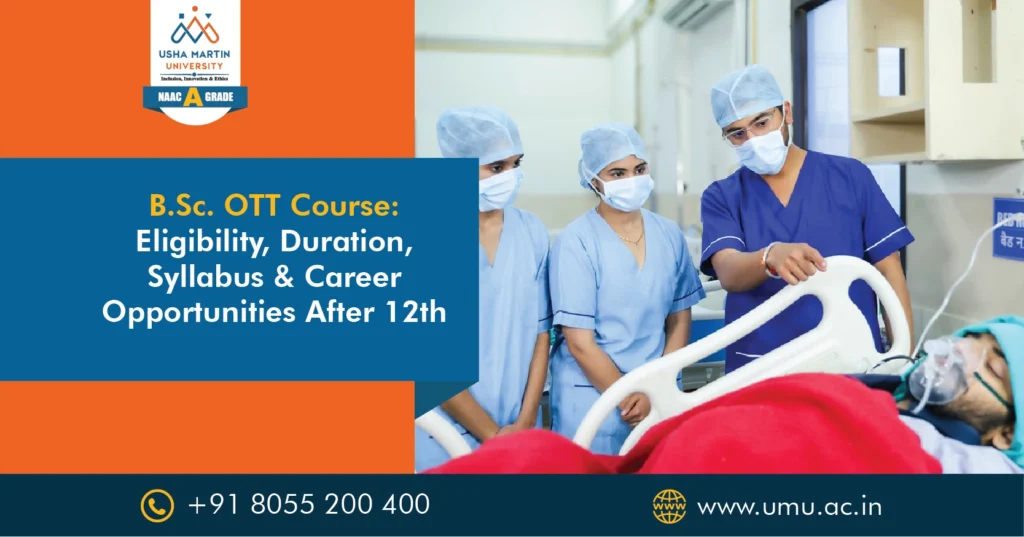
If you have completed Class 12 with science and are looking for a paramedical course after 12th, have you considered a career inside the operation theater?
Every successful surgery depends on more than a surgeon. Behind the scenes, a trained team is responsible for preparing the operation theater, arranging surgical instruments, maintaining sterility, supporting the surgical team, and ensuring that essential equipment is ready and functioning properly. This is where Operating Theatre Technology (OTT) becomes important.
A B.Sc. Operation Theatre Technology program can be a suitable option for students who want to enter the healthcare sector without pursuing an MBBS degree. It combines knowledge of anatomy, physiology, surgical procedures, infection control, equipment handling, patient care, and operation theater management.
If you are searching for B.Sc. OTT course admission, operation theatre technician courses, OT assistant courses, or the B.Sc. OTT course in Jharkhand, this guide will help you understand the course, eligibility, duration, syllabus, skills, career opportunities, and admission process.
At Usha Martin University, Ranchi, we aim to prepare you not just to understand healthcare concepts but also to develop the practical skills required in real healthcare environments.
What Is a B.Sc. OTT Course?
B.Sc. OTT stands for Bachelor of Science in Operation Theatre Technology. It is an undergraduate paramedical program focused on the technical and clinical aspects of operation-theater procedures. But what exactly does an operation theater technologist do? An OT technologist works as an important member of the surgical team. Depending on the role and institutional protocols, responsibilities may include preparing the operation theatre, arranging instruments and supplies, supporting sterilization and infection-control practices, assisting with equipment preparation, maintaining OT readiness, and supporting the clinical team before, during, and after procedures.
The profession therefore requires much more than knowing the names of surgical instruments. You need to understand how an operation theater functions as a coordinated clinical environment.
The current B.Sc. Operation Theatre Technology program information published by Usha Martin University describes training across pre-operative, intra-operative, and post-operative areas, including operation theatre equipment, sterility, patient care, and surgical procedures. This makes OTT particularly relevant if you are interested in healthcare but want to build a career in a specialized technical area.
Why Is Operation Theater Technology Important?
Think about what happens before a surgical procedure begins.
The operation theater has to be prepared. Surgical instruments have to be available. Equipment needs to be checked. Sterility and infection-control procedures need to be followed. The surgical team needs an organized environment in which to work. During surgery, coordination becomes even more important. This means an operation theater cannot function efficiently through the efforts of one professional alone.
Healthcare systems depend on a diverse workforce that includes doctors, nurses, allied health professionals, technicians, and other support professionals. The World Health Organization emphasizes that a skilled and adequately trained health workforce is fundamental to accessible and quality healthcare. WHO also notes that India has been working to build a skilled health workforce capable of responding to changing healthcare needs. This broader healthcare requirement is one reason paramedical education has become an important career pathway.
B.Sc. OTT Course: Why Should You Consider It?
You may be wondering:
“Is B.Sc. OTT a good career option after 12th?” It can be worth considering if you are interested in healthcare, surgical environments, technology, and patient-care support but do not want to pursue a conventional medical degree.
Here are some reasons students explore this field.
- You Become Part of the Healthcare Team: Your work can contribute to the smooth functioning of surgical procedures and patient care.
- It Combines Science and Practical Skills: You study scientific concepts while also learning about equipment, procedures, infection control, and OT practices.
- You Develop a Specialized Skill Set: Instead of studying healthcare in a broad way, you develop knowledge focused on operating-theater technology.
- You Can Explore Multiple Healthcare Settings: Depending on your qualifications, skills, experience, and employer requirements, career opportunities may exist in hospitals, surgical centers, trauma and emergency facilities, intensive-care environments, and other healthcare institutions.
- Healthcare Continues to Need Skilled Professionals: The WHO’s latest health workforce data highlights continuing global workforce shortages and the need for sustained investment in education and training. WHO currently projects a global shortage of around 11 million health workers by 2030, particularly affecting low- and lower-middle-income countries.
This does not mean every paramedical graduate automatically gets a job. Your employability will depend on your education, practical competence, experience, location, employer requirements, and professional skills. But it does underline the broader importance of developing a skilled healthcare workforce.
B.Sc. OTT Eligibility Criteria
One of the first questions students ask is
“Who can apply for B.Sc. Operation Theatre Technology?”
According to Usha Martin University’s current program information, candidates applying for B.Sc. Operation Theatre Technology need to have passed 10+2 with 50% marks in Physics, Chemistry, and Biology. Therefore, if you have completed Class 12 with PCB and are interested in a healthcare career, you can explore BSc OTT course admission at UMU. However, eligibility requirements can be updated by institutions or regulatory authorities. We recommend checking the current admission notification before applying.
B.Sc. OTT Course Duration
How long does it take to complete a B.Sc. OTT degree? Usha Martin University’s current Faculty of Paramedical & Health Sciences information lists B.Sc. Operation Theatre Technology as a three-year undergraduate program. The program is structured to provide students with academic knowledge as well as practical exposure relevant to operation-theater environments.
This combination matters because healthcare is a practical profession. You don’t simply need to know what an instrument is. You should also understand where, why, and how it is used while following the appropriate clinical protocols and supervision.
B.Sc. OTT Course Syllabus
What will you study during a B.Sc. operation theatre technology degree? The exact semester-wise syllabus can vary according to the university curriculum, but major areas generally focus on anatomy, physiology, microbiology, surgical procedures, operation theater technology, infection control, equipment, and patient care.
At Usha Martin University, the published program information highlights subjects and areas including human anatomy, physiology, hematology& blood banking, introduction to operation theater technology, and applied microbiology, along with broader training in surgical technology, anesthesia technology, critical care, and operation-theater procedures.
You can expect your learning to cover areas such as:
- Human Anatomy and Physiology: You need to understand the structure and functioning of the human body before you can understand surgical procedures.
- Microbiology: Microbiology helps you understand microorganisms, infection, and the importance of maintaining appropriate infection-control practices.
- Operation Theatre Technology: This introduces you to the functioning, organization, and technical requirements of an operation theater.
- Surgical Procedures: You learn about different surgical environments, procedures, and the role of the OT team.
- Surgical Instruments and Equipment: An important part of OTT education is becoming familiar with surgical instruments and medical equipment and understanding their appropriate handling.
- Sterilization and Infection Control: Maintaining a safe clinical environment is essential. Students learn about sterilization, disinfection, aseptic practices, and infection-control principles.
- Anesthesia Technology: Students may learn the basic principles and equipment associated with anesthesia under the scope of their curriculum and professional responsibilities.
- Patient Care: Operation-theatre professionals need to understand patient preparation, monitoring requirements, and appropriate support before and after procedures.
- Critical Care: Exposure to critical-care concepts can help students understand the requirements of patients undergoing complex medical and surgical treatment.
- Hospital and OT Management: Students also need to understand how an operation theater is organized, maintained, and managed as part of a healthcare institution. The objective is not simply to memorize subjects. We want you to understand how these different areas work together in a real healthcare setting.
What Does an Operation Theatre Technician Do?
The job title “Operation Theatre Technician” is commonly used for professionals who support the functioning of operating rooms. But what does that actually involve?
Depending on the employer, role, and professional scope, responsibilities can include the following:
- Preparing the operation theater
- Arranging surgical instruments and supplies
- Supporting the surgical team
- Maintaining OT readiness
- Following infection-control protocols
- Supporting sterilization procedures
- Handling relevant equipment
- Maintaining records and supplies
- Assisting with patient preparation as directed
- Following safety procedures
- Supporting pre-operative and post-operative processes
The exact responsibilities vary according to the workplace, qualifications, professional regulations, and level of experience.
An OT technician is not a doctor or surgeon. The role is part of the multidisciplinary healthcare team and involves working under appropriate clinical supervision and protocols.
OT Assistant vs. Operation Theatre Technologist
Students sometimes search for OT assistant courses because they are unsure about the difference between an assistant-level role and a degree-level qualification.
An OT assistant may perform supportive responsibilities within an operation theater environment, depending on the healthcare institution and role. An operation theatre technologist, after completing a relevant degree such as B.Sc. OTT, is trained in a broader range of technical and clinical-support areas related to operation-theatre functioning.
Your career responsibilities will depend on your qualifications, employer, experience, and applicable professional standards.If you want a structured undergraduate education rather than only short-term vocational training, a B.Sc. OTT program can provide a broader academic foundation.
Skills You Need for a Career in Operation Theatre Technology
Do you need only technical knowledge to become an OT professional?
No.
Healthcare requires a combination of technical competence and human qualities.
- Attention to Detail: A surgical environment requires accuracy. You need to pay attention to instruments, equipment, procedures, and protocols.
- Communication: You need to communicate clearly with members of the healthcare team.
- Teamwork: Surgery is a coordinated process. You will work alongside doctors, nurses, anesthesia professionals, technicians, and other staff.
- Responsibility: Small mistakes can have serious consequences in healthcare. You need to take protocols and responsibilities seriously.
- Calmness Under Pressure: Operating theaters can be demanding environments. You need to remain focused and composed.
- Technical Confidence: Modern healthcare involves specialized equipment. You should be willing to learn and handle technology responsibly.
- Empathy: Behind every procedure is a patient. Technical competence should always be accompanied by respect and sensitivity towards patients.
Career Opportunities After B.Sc. OTT
What can you do after completing a B.Sc. operation theatre technology degree? Your career path can depend on your skills, experience, employer, and the role for which you qualify.
Potential job profiles include:
- Operation Theatre Technologist
- Operation Theatre Technician
- Surgical Assistant
- Anesthesia Technician
- Critical Care Technician
- Emergency Care Assistant
- Operation Theatre Coordinator
- Healthcare Technician
- Surgical Equipment Specialist
Usha Martin University also lists career possibilities across hospitals, nursing homes, trauma and emergency centers, intensive-care units, and other healthcare settings.
With experience and additional qualifications, you may also explore opportunities in areas such as hospital administration, equipment management, education, or specialized healthcare services, subject to the requirements of the role.
Where Can B.Sc. OTT Graduates Work?
The healthcare sector is much larger than large hospitals.
Depending on your qualifications and job profile, you may explore opportunities in:
- Hospitals: Multispecialty and specialty hospitals require trained personnel to support surgical services.
- Surgical Centers: Dedicated surgical facilities also require operation theater support staff.
- Trauma and Emergency Centers: These environments require professionals who understand the importance of preparedness, equipment, and coordinated clinical support.
- Intensive Care Units: Some OTT graduates may explore critical-care-related roles depending on their training and employer requirements.
- Nursing Homes and Healthcare Facilities: Smaller healthcare institutions may also require trained operation theater personnel.
- Medical Equipment Sector: With appropriate knowledge and experience, some professionals may explore roles related to surgical equipment and healthcare technology.
Is B.Sc. OTT a Good Career After 12th Science?
Let’s make this practical.
If you are a Class 12 Science student, ask yourself three questions.
- Do I want to work in healthcare?
- Am I comfortable working in a clinical environment?
- Do I enjoy science, technology, and practical work?
If your answer is yes, B.Sc. OTT could be a career pathway worth exploring.
It may be particularly suitable for students who want a specialized paramedical career and are interested in surgical environments. However, you should choose the program because it matches your interests and career goals—not simply because someone tells you it has “high demand.” A good healthcare professional needs commitment, discipline, and a genuine interest in patient care.
Why Choose Usha Martin University for B.Sc. OTT?
If you are searching for a B.Sc. OTT course in Jharkhand, the choice of institution matters.
At Usha Martin University, Ranchi, the B.Sc. Operation Theatre Technology program is designed around theoretical understanding, practical learning, and exposure to healthcare environments. The university states that students receive hands-on learning, industry interaction, professional exposure, and clinical experience through its healthcare education ecosystem.
- Practical-Oriented Education: We understand that operation-theater technology cannot be learned effectively through textbooks alone. Practical exposure helps you become familiar with equipment, procedures, and clinical environments.
- Experienced Faculty: Your faculty plays an important role in helping you understand both theoretical concepts and their practical relevance.
- Modern Infrastructure: Healthcare education requires appropriate laboratories and training facilities. UMU highlights modern academic infrastructure for its paramedical programs.
- Clinical Exposure: UMU states that its paramedical programs provide clinical exposure and hands-on experience through tie-ups with private and government hospitals, community healthcare centers, and nursing homes.
- Industry-Relevant Learning: We focus on helping you understand the practical expectations of healthcare workplaces rather than limiting your learning to theoretical concepts.
- Career Preparation: The objective is to help you graduate with technical knowledge, professional confidence, and an understanding of the responsibilities associated with operation-theater technology.
B.Sc. OTT Admission 2026 at Usha Martin University
If you have decided that operation theater technology matches your interests, what should you do next?
Usha Martin University currently lists Admissions Open 2026–27 and includes B.Sc. OTT among its paramedical programs.
The basic process involves submitting the application and relevant academic documents, followed by eligibility verification and admission formalities.
Before applying, make sure you have your academic documents ready and verify the latest eligibility and admission requirements.
If you are specifically looking for B.Sc. OTT course admission in Jharkhand, UMU’s Ranchi campus provides an option to pursue the program in the state.
What after B.Sc. OTT?
Completing your degree is not the end of your learning journey.
Healthcare technology continues to evolve.
You may later choose to strengthen your career through:
- Advanced qualifications
- Specialized training
- Professional certifications
- Clinical experience
- Healthcare management education
- Research
- Teaching, where eligible
- Specialized equipment knowledge
Your first role may give you practical experience, while further education can help you explore new responsibilities over time.
The healthcare workforce is also becoming increasingly diverse and specialized. WHO notes that health workforce development requires continued investment in education, training, recruitment, and retention.
This makes lifelong learning particularly relevant for healthcare professionals.
Conclusion
Choosing a career after Class 12 can feel overwhelming. You may have asked yourself:
- “Should I pursue MBBS?”
- “Should I choose nursing?”
- “Is there a good paramedical course after 12th?”
- “Can I build a healthcare career without becoming a doctor?”
B.Sc. Operation Theatre Technology can be one answer worth exploring if you are interested in surgical care, healthcare technology, and practical clinical work.
The profession requires responsibility because the operating theater is one of the most critical environments in a hospital. You will need technical knowledge, attention to detail, teamwork, communication, and a strong commitment to following safety and infection-control procedures.
At Usha Martin University, we aim to give you an educational foundation that combines classroom learning with practical exposure so that you can approach your future healthcare career with greater confidence.
If you are looking for a B.Sc. OTT course in Jharkhand, have completed 10+2 with the required science subjects, and want to explore a specialized paramedical career, now is the right time to understand your options. Your journey in healthcare does not necessarily have to begin with a white coat and a stethoscope. It can begin in the operation theater—with knowledge, skill, discipline, and the willingness to make a meaningful contribution to patient care. Admissions Open 2026–27 at Usha Martin University. Explore B.Sc. Operation Theater Technology and take the next step towards your healthcare career.
Frequently Asked Questions (FAQ’s)
Q1. What is B.Sc. OTT?
B.Sc. OTT, or Bachelor of Science in Operation Theatre Technology, is an undergraduate paramedical program that focuses on operation-theatre procedures, surgical equipment, infection control, patient care, and technical support during surgical procedures.
Q2. What is the eligibility for B.Sc. OTT at Usha Martin University?
According to UMU’s current program information, candidates should have passed 10+2 with 50% marks in physics, chemistry, and biology.
Q3. What is the duration of the B.Sc. OTT course?
Usha Martin University’s current Faculty of Paramedical & Health Sciences information lists the B.Sc. Operation Theatre Technology program as a three-year undergraduate degree.
Q4. What does an operation theatre technician do?
An OT technician supports the operation-theatre team by helping prepare the theatre, arranging equipment and instruments, following sterilization and infection-control protocols, and supporting surgical procedures according to their role and clinical supervision.
Q5. What are the career options after B.Sc. OTT?
Graduates can explore roles such as operation theatre technologist, OT technician, surgical assistant, anesthesia technician, critical care technician, and other healthcare-support positions, depending on their qualifications and employer requirements.
Q6. Is B.Sc. OTT a good paramedical course after 12th?
It can be a suitable option for science students interested in healthcare, surgical environments, medical equipment, and practical clinical work. You should consider your interests, aptitude, and long-term career goals before choosing the program.
Q7. Why choose Usha Martin University for B.Sc. OTT?
UMU highlights practical learning, modern infrastructure, clinical exposure, industry interaction, and healthcare-focused education for its Operation Theatre Technology program.