UGC-DEB Approves Usha Martin University’s Online BBA, BCA, MBA & MCA Programs
September 10, 2026
Degree Courses After 12th: Top Undergraduate Programs for Career Growth
September 12, 2026
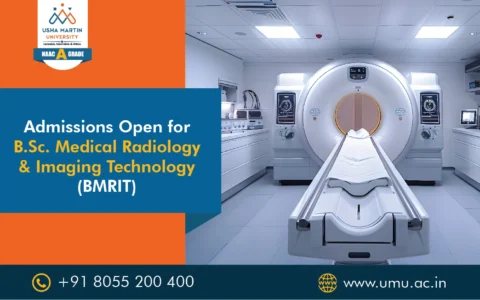
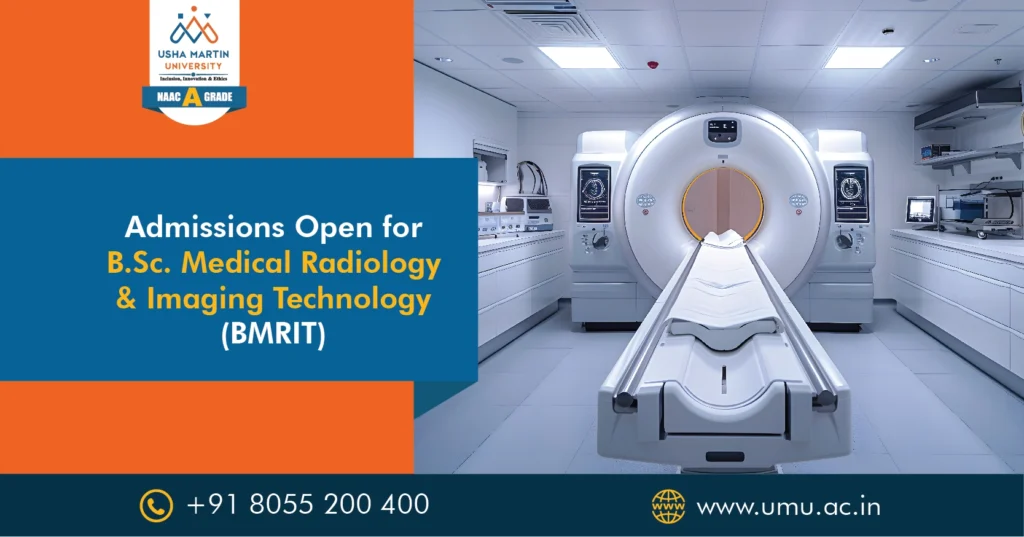
If you are interested in healthcare but want to build your career around medical technology, diagnostic imaging, and patient care, a bachelor’s in radiology & imaging technology can be an exciting career path to explore. Modern healthcare depends heavily on accurate diagnostic imaging, and trained radiology professionals play an important role in helping doctors understand and diagnose different medical conditions.
If you are searching for a radiology course, a BMRIT course in Jharkhand, or a BSc Radiology course in Ranchi, understanding the program, eligibility, admission process, subjects, career opportunities, and skills involved can help you make a better decision.
At Usha Martin University, the Bachelor in Radiology & Imaging Technology is designed to help you develop the academic knowledge and practical understanding required to work with diagnostic imaging technologies in healthcare settings.
What Is BMRIT Full Form?
BMRIT stands for Bachelor of Medical Radiology and Imaging Technology. It is an undergraduate program focused on medical imaging technologies and the techniques used to produce diagnostic images of the human body.
Radiology and imaging are important parts of modern healthcare because medical professionals often depend on diagnostic images to identify, assess, and monitor health conditions.
During a BMRIT program, you can learn about areas such as radiographic techniques, imaging equipment, patient positioning, radiation safety, anatomy, physiology, and other aspects of diagnostic imaging.
The exact program structure and terminology can vary between universities, so you should always check the curriculum and program details of the institution where you plan to study.
Why Is Radiology and Medical Imaging Important?
Think about what happens when a doctor needs more information than a physical examination can provide. A patient may need an X-ray, CT scan, MRI, or another imaging investigation. The resulting images can provide valuable information about bones, organs, tissues, and other structures inside the body.
This is where radiology and imaging professionals become important. They work with imaging equipment and follow established procedures to obtain diagnostic-quality images while maintaining patient safety.
Your role can involve much more than operating a machine. You may also need to communicate with patients, understand their requirements, position them correctly, follow safety protocols, and work closely with other healthcare professionals.
BMRIT Course: What Will You Learn?
A BMRIT course combines theoretical knowledge with practical learning.
Depending on the university curriculum, your studies may cover areas such as
- Human anatomy
- Human physiology
- Pathology
- Radiographic techniques
- Radiation physics
- Radiation protection
- Medical imaging
- X-ray technology
- CT imaging
- MRI fundamentals
- Ultrasound fundamentals
- Patient care
- Medical ethics
- Healthcare procedures
- Imaging equipment and technology
You may also encounter subjects related to image processing, quality assurance, healthcare communication, and clinical practices.
The purpose is to help you understand both the science behind medical imaging and the practical responsibilities involved in working in a healthcare environment.
BSc Radiology Course in Ranchi: Is It a Good Career Option?
If you are looking for a BSc Radiology course in Ranchi, you may be considering whether radiology is a suitable career choice after Class 12.
The healthcare sector is becoming increasingly dependent on technology. Diagnostic imaging is one of the areas where medical science and technology come together.
For students who enjoy science, healthcare, and technology, radiology and imaging can offer an interesting combination.
However, you should choose the program because it matches your interests and career goals—not simply because it is considered a growing field.
If you enjoy working with technology, want to contribute to patient care, and are comfortable working in a healthcare environment, a radiology program may be worth exploring.
Who Can Apply for BMRIT Course Admission?
The eligibility criteria for BMRIT course admission depend on the university and program regulations.
Generally, undergraduate radiology and imaging programs are intended for students who have completed Class 12, particularly with science subjects.
Before applying, you should check:
- Required Class 12 subjects
- Minimum qualifying marks
- Age requirements, if applicable
- Admission process
- Required documents
- University-specific eligibility conditions
At Usha Martin University, you should check the latest official admission guidelines for the current academic session to confirm the exact eligibility requirements.
Urvashi Singh (BMRIT) Reviews | Student Testimonials | Usha Martin University, Ranchi, Jharkhand
BMRIT Course Admission at Usha Martin University
If you are planning on BMRIT course admission in Ranchi, choosing the right university is an important step.
At Usha Martin University, we focus on creating an academic environment where you can build healthcare knowledge while developing practical skills relevant to your chosen field.
Your learning journey should not stop with understanding concepts from textbooks. Healthcare is a practical profession, so exposure to equipment, procedures, demonstrations, and clinical applications can make your education more meaningful.
When you explore admission, look beyond the course name and compare the curriculum, facilities, faculty, practical exposure, academic environment, and career support offered by the university.
Radiology Course: What Skills Can You Develop?
A successful radiology professional needs both technical understanding and professional skills.
Through a radiology course, you can work towards developing skills such as
- Technical Skills: You can develop an understanding of diagnostic imaging equipment, imaging procedures, and technical protocols.
- Patient Communication: Patients may feel anxious before an imaging procedure. Good communication can help you explain procedures clearly and make them feel more comfortable.
- Patient Positioning: Correct positioning is important for obtaining appropriate diagnostic images. You can learn the principles and techniques involved in patient positioning.
- Radiation Safety: Radiation safety is a fundamental aspect of radiographic practice. You can learn about radiation protection principles and safe working practices.
- Attention to Detail: Imaging requires accuracy. Small technical errors can affect image quality, which makes attention to detail an important professional skill.
- Teamwork: Radiology professionals work as part of a broader healthcare team. Communication and coordination can therefore become important parts of your professional development.
What Is the Difference Between Radiology and Radiography?
These terms are often used interchangeably by students, but they can refer to different aspects of healthcare.
Radiology is a broader medical field involving diagnostic imaging and, in some contexts, image-guided or therapeutic procedures performed by qualified medical professionals.
Radiography generally refers to the use of imaging equipment and techniques to create diagnostic images, particularly X-ray-based imaging.
A radiology and imaging technology program focuses on preparing students for technical and clinical support roles associated with medical imaging.
Understanding this distinction can help you select the right program for your career goals.
What Technologies Can You Explore During a BMRIT Program?
Medical imaging has evolved significantly over the years.
Depending on your curriculum and practical exposure, you may learn about technologies such as
- X-ray: One of the most widely used diagnostic imaging techniques.
- Computed Tomography (CT): Uses X-rays and computer processing to create detailed cross-sectional images.
- Magnetic Resonance Imaging (MRI): Uses strong magnetic fields and radio waves to produce detailed images of internal body structures.
- Ultrasound: Uses high-frequency sound waves to create images of structures within the body.
Each technology has different applications, operating principles, and safety considerations.
Learning about these technologies can help you understand how modern diagnostic departments function.
BMRIT Course in Jharkhand: Why Study in Ranchi?
If you are searching for a BMRIT course in Jharkhand, Ranchi can be an important city to consider.
As the capital of Jharkhand, Ranchi has a growing healthcare and education ecosystem. Students from different parts of the state can explore higher-education opportunities in the city without necessarily moving to a metropolitan area outside Jharkhand.
For students specifically looking for a radiology course in Ranchi, the location can also make it easier to remain closer to family while pursuing an undergraduate healthcare program.
But location should not be your only consideration.
Your priority should be finding a university where the program, learning environment, practical facilities, and academic support align with your goals.
Career Scope After BMRIT
One of the most important questions students ask before choosing a course is
What can I do after completing BMRIT?
After completing your degree, you can explore opportunities in healthcare organizations where medical imaging services are provided.
Depending on your qualifications, skills, and applicable regulations, potential work environments may include:
- Hospitals
- Diagnostic centers
- Imaging centers
- Medical laboratories and healthcare facilities
- Specialized imaging departments
- Clinics with diagnostic services
- Healthcare technology organizations
- Research and academic environments
Potential job titles may include roles such as radiology technologist, radiographer, imaging technologist, and related healthcare-support positions, subject to employer and regulatory requirements.
What Does a Radiology Technologist Do?
A radiology technologist works with medical imaging procedures and equipment according to their training and scope of practice.
Your responsibilities may include preparing equipment, assisting patients, positioning them appropriately, following imaging protocols, maintaining safety standards, and ensuring that images meet required technical quality.
You may also work with doctors, radiologists, nurses, and other healthcare professionals.
The role therefore requires technical knowledge, patient-care skills, and professional discipline.
Career Opportunities After a Radiology Course
The healthcare industry includes a wide range of diagnostic services, and imaging professionals can explore different work environments.
With relevant qualifications and experience, you can build your career in areas connected with:
- Diagnostic imaging
- Hospital radiology departments
- CT imaging
- MRI services
- X-ray services
- Imaging centers
- Healthcare technology
- Clinical support
- Education and training
- Research-related activities
Your career path can evolve as you gain experience and pursue additional qualifications or specialized training.
Higher Studies After BMRIT
Completing your undergraduate degree does not necessarily mean your learning journey has to end. If you want to specialize or move towards advanced academic and professional opportunities, you can explore relevant postgraduate programs, certifications, and specialized training based on eligibility and institutional requirements.
You may also develop additional skills in areas such as healthcare management, medical imaging technologies, hospital administration, or other related fields.
Before choosing a higher-study program, check whether it accepts your undergraduate qualification and whether it aligns with your intended career path.
Why Choose Usha Martin University for a BMRIT Course?
Choosing the right university can make a significant difference to your undergraduate experience. At Usha Martin University, we understand that healthcare education needs a combination of knowledge, practical understanding, and professional responsibility.
- Practical-Oriented Learning: You need more than theoretical knowledge to work confidently in a healthcare environment. Practical learning can help you understand how concepts are applied in real situations and how imaging procedures and technologies fit into patient care.
- Focus on Professional Skills: We encourage students to develop communication, teamwork, discipline, problem-solving, and technical understanding alongside academic knowledge. These skills can help you adapt to the expectations of healthcare workplaces.
- Learning in a University Environment: Studying at a university can give you opportunities to interact with students and faculty from different academic disciplines. This broader environment can help you develop communication skills, confidence, and a wider understanding of professional life.
- Career-Oriented Education: Your degree is the beginning of your professional journey. We aim to help you build a foundation that can support your future career development through academic learning, practical exposure, and professional skill development.
What Should You Check Before Taking BMRIT Admission?
Before submitting your application, take a few minutes to compare your options.
Check the:
- Course curriculum: Does it cover the imaging technologies and healthcare subjects you want to learn?
- Practical facilities: Will you have opportunities for hands-on learning?
- Faculty: Are qualified faculty members available to guide you?
- Clinical exposure: Does the program provide appropriate practical or clinical learning opportunities?
- University recognition: Is the degree awarded by a recognized institution?
- Admission requirements: Do you meet the current eligibility criteria?
- Fees: Can you understand the complete fee structure before admission?
- Career support: Does the university provide appropriate career guidance and placement assistance?
These questions can help you make a more informed decision.
Is BMRIT a Good Course After 12th?
If you have completed Class 12 with a science background and are interested in healthcare and technology, BMRIT can be an option worth exploring. The program combines knowledge of human anatomy and healthcare with medical imaging technology.
However, ask yourself a few questions before choosing it:
- Do you enjoy science?
- Are you interested in medical technology?
- Are you comfortable working around patients?
- Do you have patience and attention to detail?
- Are you interested in learning how diagnostic imaging works?
If your answer is yes to most of these questions, a radiology and imaging technology program may fit your interests.
Build Your Career in Medical Imaging with UMU
Healthcare is changing rapidly, and technology is becoming an increasingly important part of diagnosis and patient care. If you want to enter a field where healthcare and technology meet, a BMRIT course can provide a foundation for exploring a career in medical imaging. For students searching for a radiology course in Ranchi, a BMRIT course in Jharkhand, or a BSc Radiology course in Ranchi, Usha Martin University offers an opportunity to pursue undergraduate education in this field within a university environment.
We encourage you to understand the program, explore your career interests, and make an informed decision about your future.
Your healthcare career can begin with the right education, practical skills, and willingness to keep learning. Explore BMRIT Course Admission at Usha Martin University and take your first step towards a career in radiology & imaging technology.
Frequently Asked Questions (FAQ’s)
Q1: What is the BMRIT full form?
The BMRIT full form is Bachelor of Medical Radiology and Imaging Technology. It is an undergraduate program focused on medical imaging technologies, radiographic techniques, patient care, and related healthcare practices.
Q2: What is a BMRIT course?
A BMRIT course is an undergraduate program that teaches you about medical imaging, radiographic techniques, imaging equipment, radiation safety, and patient-care practices.
Q3: What is the eligibility for BMRIT course admission?
Eligibility for BMRIT course admission varies by university. Generally, candidates are required to complete Class 12, particularly with science subjects. You should check the latest eligibility requirements of the university before applying.
Q4: Is there a radiology course in Ranchi?
Yes, students looking for a radiology course in Ranchi can explore undergraduate programs in radiology and medical imaging technology offered by universities and institutions in the city. Compare the curriculum, practical facilities, eligibility, and admission requirements before choosing a program.
Q5: What is the scope of a BMRIT course in Jharkhand?
A BMRIT course in Jharkhand can prepare you for career opportunities associated with diagnostic imaging and healthcare services. Depending on your qualification and experience, you can explore roles in hospitals, diagnostic centers, and imaging facilities.
Q6: Is a BSc in Radiology a good career option?
A BSc Radiology course in Ranchi can be a suitable option if you are interested in healthcare, medical technology, and diagnostic imaging. Your career growth will depend on your education, practical skills, experience, specialization, and continued professional development.
Q7: Why choose Usha Martin University for a radiology course?
Usha Martin University provides a university-based learning environment where you can develop academic knowledge, practical understanding, and professional skills relevant to radiology and imaging technology. Before admission, you should review the latest program curriculum, eligibility, facilities, and admission information.