UMU Celebrates 80th Independence Day with Patriotism and Spirit of Nation Building
August 14, 2026
Why Usha Martin University Is Emerging as a Hub for Skill-Based Education
August 19, 2026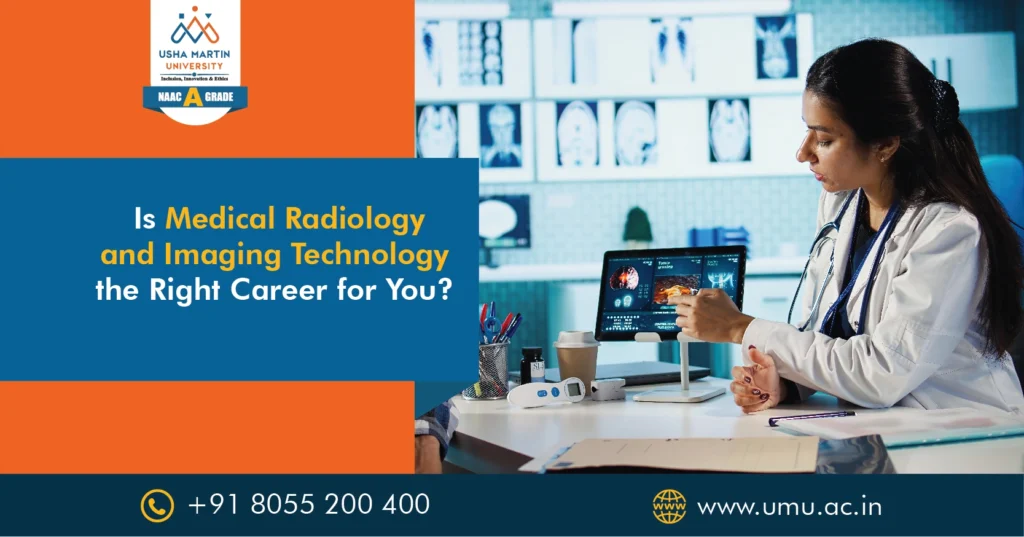
Choosing a healthcare career after Class 12 does not always mean becoming a doctor, nurse, or pharmacist. If you are interested in medical science, healthcare technology, diagnostic imaging, and patient care, there is another career path worth exploring: medical radiology and imaging technology.
But is it actually the right career for you? If you are searching for BMRIT course admission, BSc radiology programs, BSc Radiology & Imaging Technology, BSc radiology programs in India, or BMRIT programs in Ranchi, you are probably looking for more than just a course name. You want to know what you will study, what the career looks like, whether the field has future scope, what skills you need, and whether a university such as Usha Martin University in Ranchi can help you build the right foundation.
The short answer is medical radiology and imaging technology can be a strong career option if you enjoy healthcare, technology, accuracy, and working with patients—but it is not the right choice for everyone.
Let us understand why.
What Is Medical Radiology and Imaging Technology?
Medical radiology and imaging technology is an allied healthcare field concerned with the use of medical imaging technologies to help healthcare professionals examine structures inside the human body. Depending on the clinical setting and professional role, imaging technologies can include X-ray, computed tomography (CT), magnetic resonance imaging (MRI), ultrasound, and other imaging techniques.
The Ministry of Health and Family Welfare’s model curriculum identifies medical radiology and imaging technology as an allied health profession and emphasizes technical competence, clinical competence, radiation safety, quality assurance, evidence-based practice, and multidisciplinary teamwork. In simple words, you learn how medical imaging equipment is used safely and effectively to produce diagnostic images while maintaining patient care and professional standards.
That makes the field a combination of the following:
- Medical science
- Technology
- Anatomy
- Imaging techniques
- Patient care
- Radiation safety
- Clinical practice
- Communication
- Quality assurance
So, if you love both healthcare and technology, BMRIT may be worth considering.
Is BMRIT the same as B.Sc. Radiology?
This is one of the questions students frequently ask.
You may see different names online, including:
- BMRIT
- B.Sc. Medical Radiology & Imaging Technology
- B.Sc. Radiology
- B.Sc. Radiography
- B.Sc. Radiology & Imaging Technology
- Medical Radiology and Imaging Technology
The exact program title, duration, curriculum, and eligibility can vary between institutions. Therefore, you should always check the university’s official program page rather than assuming that every course carrying the word “radiology” is identical. At Usha Martin University, the program is listed as B.Sc. Medical Radiology & Imaging Technology (BMRIT). The university’s current program page lists it as a four-year undergraduate program.
The university’s Faculty of Health and Allied Sciences also lists B.Sc. Medical Radiology & Imaging Technology as a four-year program comprising three years of academics and one year of internship. Therefore, if you are comparing BSc radiology programs, look carefully at the actual curriculum, clinical exposure, internship structure, and eligibility—not just the program title.
Why Is Medical Imaging Important in Modern Healthcare?
Think about what happens when a patient arrives at a hospital with a suspected fracture. A doctor may need an X-ray. A patient with certain neurological symptoms may require CT or MRI imaging. Someone undergoing cancer evaluation may require imaging at different stages of diagnosis and treatment. In many clinical situations, imaging provides important information that cannot be obtained through a physical examination alone.
That is why imaging professionals form an important part of the healthcare team. The Ministry of Health and Family Welfare’s model curriculum describes medical radiology and imaging professionals as part of multidisciplinary healthcare teams and highlights their role in diagnostic and imaging services.
At the same time, technology is changing healthcare rapidly. The World Health Organization’s 2026 health workforce report highlights continuing workforce shortages and unequal distribution of health professionals globally, reinforcing the importance of developing a capable and appropriately trained health workforce. This does not mean that every radiology graduate automatically gets a job. It does mean that healthcare continues to require trained professionals who can work effectively with modern diagnostic technologies.
Why Choose BMRIT After 12th?
If you have completed Class 12 with a science background and are considering healthcare but do not want to pursue MBBS, BMRIT can provide an alternative route into the healthcare sector.
You can develop knowledge in areas such as the following:
- Human anatomy
- Physiology
- Medical terminology
- Radiographic positioning
- Radiation physics
- Imaging procedures
- Patient care
- Radiographic equipment
- CT imaging
- MRI fundamentals
- Radiation protection
- Quality control
- Clinical practice
The exact subjects depend on the university and curriculum. The national model curriculum for medical radiology and imaging technology specifically emphasizes technical and clinical competence, radiation safety, quality assurance, and evidence-based practice. This is important because the profession is not simply about operating a machine. You are working around patients, medical equipment, and clinically important information. Accuracy and responsibility matter.
Who Should Choose Medical Radiology and Imaging Technology?
Let us make this practical. BMRIT may suit you if you:
- Enjoy Biology and Healthcare: If human anatomy, physiology, and medical science interest you, you may enjoy the academic side of the course.You do not necessarily have to love every biology chapter. But you should be comfortable learning about the human body and healthcare procedures.
- Like Technology: Modern medical imaging depends heavily on sophisticated equipment and digital systems.
If you enjoy learning how machines and technology work, the field can be particularly interesting.
- Are Detail-Oriented: Radiology and imaging require accuracy. Patient positioning, imaging parameters, safety protocols, and image quality can all matter.If you tend to notice small details and follow procedures carefully, that can become a professional advantage.
- Can Stay Calm Around Patients: Patients arriving for imaging may be anxious, uncomfortable, or in pain. Your role is not limited to technology. You may need to explain procedures, communicate clearly, and help patients feel comfortable while following clinical instructions.
- Are Serious About Safety: Radiation safety is an important component of radiology education. The Ministry of Health and Family Welfare’s curriculum specifically identifies awareness of radiation safety and quality assurance as expected competencies. If you are someone who takes safety procedures seriously, that is a good sign.
Who Should Probably Not Choose BMRIT?
Being honest about this is just as important.
BMRIT may not be ideal if you:
- Dislike science subjects
- Do not want to work in healthcare environments
- Feel uncomfortable around patients
- Are careless with technical procedures
- Do not like technology
- Want a completely desk-based career
- Are unwilling to follow safety protocols
- Expect a healthcare degree to guarantee a job.
A professional degree is an opportunity—not a guarantee.
Your skills, clinical exposure, communication, academic performance, internship experience, and ability to keep learning will influence your career.
BMRIT Course Admission: What Should You Check?
If you are searching for BMRIT course admission 2026 or planning admission after Class 12, do not apply to a program simply because an advertisement says “admission open.”
First, check five things.
- Eligibility: Usha Martin University’s current B.Sc. MRIT program page states that candidates who have passed Class 12 from a recognized board can apply and lists 50% as the eligibility requirement. However, the university’s broader Faculty of Health and Allied Sciences page currently shows program-specific eligibility information that differs in wording, including a PCB-based requirement. Because eligibility information can be program- and admission-cycle-specific, you should verify the latest criteria with the university before submitting your application.
- Course Duration: Usha Martin University lists the BMRIT program as four years, while its faculty information describes the structure as three academic years plus one year of internship.
- Curriculum: Ask whether the program includes both theoretical education and practical/clinical training.
- Internship: Clinical exposure is particularly important in an allied healthcare program.
- Recognition and Institutional Information: Before paying fees, verify the university’s current recognition, approvals, and program-specific regulatory requirements.
- These checks can help you make a more informed decision.
What Will You Study in B.Sc. Radiology & Imaging Technology?
The exact syllabus varies by institution, but you can expect a combination of basic medical sciences, imaging sciences, and clinical training.
Common areas may include:
- Human Anatomy and Physiology: You need to understand the body’s structures and functions because imaging is ultimately about visualizing anatomy.
- Radiation Physics: This helps you understand the principles behind radiation and imaging equipment.
- Radiographic Techniques: You learn how different imaging procedures are performed and how patients are positioned.
- Radiation Protection: You learn how to minimize unnecessary exposure and follow safety protocols.
- CT and MRI: Advanced imaging technologies require an understanding of their principles, procedures and clinical applications.
- Patient Care: You learn how to communicate with and assist patients before, during, and after procedures.
- Clinical Training: Practical exposure helps you connect classroom concepts with real healthcare environments. The national model curriculum places strong emphasis on technical and clinical competence and practical alignment between education and employment.
BMRIT Programs in Ranchi: Why Consider Usha Martin University?
If you are specifically looking for BMRIT programs in Ranchi, Usha Martin University offers BSc Medical Radiology & Imaging Technology as part of its health and allied sciences portfolio.
The university states that its Department of Physiotherapy and Paramedical Science combines theoretical education, hands-on experience, and clinical training, including exposure through the university OPD and multispecialty hospitals. This combination matters. Imagine learning how an imaging procedure works in a classroom and then having an opportunity to understand how patient preparation, positioning, communication, and clinical workflow work in practice.
That is where theoretical knowledge begins to become professional competence. Usha Martin University’s BMRIT program information also highlights experienced faculty, practical training, and facilities intended to support learning in radiology and imaging technology. For a student comparing BSc radiology programs in Ranchi, these are the kinds of factors worth examining closely.
Career Scope After BMRIT
What can you do after completing BMRIT? Your career may develop across hospitals, diagnostic centers, imaging facilities, and other healthcare environments, depending on your qualifications, competencies, and applicable professional requirements.
Potential roles can include:
- Radiology Technologist
- Radiographer
- X-Ray Technologist
- CT Technologist
- MRI Technologist
- Imaging Technologist
- Radiology Department Assistant
- Diagnostic Imaging Professional
- Clinical tutor or academic roles after appropriate higher qualifications
Usha Martin University’s own career information includes roles connected with its BMRIT program, such as X-Ray Lab Technician and Clinical Tutor, demonstrating the kinds of professional and academic pathways associated with the discipline. However, job titles and scope of practice can differ between healthcare institutions and jurisdictions. That is why you should focus on building competencies rather than choosing a course solely because of a particular job title.
What Is the Future of BMRIT?
One of the strongest reasons to consider this field is the continued integration of technology into healthcare. Medical imaging itself is becoming increasingly sophisticated. CT scanners generate detailed cross-sectional images. MRI provides detailed imaging without ionizing radiation. Digital radiography has transformed conventional X-ray workflows. Artificial intelligence is increasingly being researched and applied in medical imaging for areas such as image analysis, workflow support, and decision assistance.
But here is an important point: AI does not eliminate the need for trained healthcare professionals. Technology still needs people who understand patients, imaging protocols, equipment, safety, quality, and clinical workflow.
The strongest future professionals may therefore be those who combine medical knowledge + imaging technology + digital literacy + communication skills.
BMRIT vs MBBS: Which Is Better?
This is not really a fair comparison because the two programs prepare you for different professional roles. MBBS is a medical degree that prepares students for a physician pathway. BMRIT is an allied healthcare degree focused on medical radiology and imaging technology.
If your dream is to become a physician and diagnose and treat patients as a doctor, you should pursue the medical education pathway appropriate to that goal. If you want to build a career around diagnostic imaging technology and work as part of a multidisciplinary healthcare team, BMRIT may be a more relevant option.
So do not ask:
“Which degree is better?”
Ask:
“Which professional role do I want?”
That question can save you years of confusion.
Is BMRIT a Good Career for You?
Here is a simple test. If your answers to most of these questions are “yes,” BMRIT may be worth serious consideration:
- Do you enjoy healthcare?
- Are you interested in medical technology?
- Are you comfortable learning anatomy and science?
- Can you work carefully with technical equipment?
- Can you communicate respectfully with patients?
- Are you willing to learn radiation safety and clinical protocols?
- Would you enjoy working in hospitals or diagnostic centers?
- Do you want a healthcare career without becoming a doctor?
If you answered yes to most of these questions, Medical Radiology and Imaging Technology could be a strong match.
Why Choose Usha Martin University for BMRIT?
When you choose a university, we believe you should look at the complete learning experience rather than one promotional claim. At Usha Martin University, the BMRIT radiology program is presented as a four-year undergraduate program, with the university’s faculty information describing three academic years followed by a one-year internship.
The university’s Department of Physiotherapy and Paramedical Science states that students receive theoretical education, hands-on experience, and clinical training. The program also focuses on the use of imaging technologies such as X-ray, CT, MRI, ultrasound, and other imaging modalities, according to the university’s program information.
For you, this can create a pathway where classroom learning, practical understanding, and clinical exposure come together. If you are looking for BMRIT programs in Ranchi, the next step should be to compare the programs’ current eligibility, curriculum, fees, internship structure, facilities, and admission process with your own career goals.
Final Verdict: Is Medical Radiology and Imaging Technology the Right Career for You?
Medical radiology and imaging technology is not simply a course for students who want to work around X-ray machines. It is a healthcare profession that combines medical science, advanced technology, patient interaction, imaging procedures, safety, and clinical responsibility. If you enjoy technology but also want your work to have a direct connection with healthcare, BMRIT can offer an interesting middle ground.
If you are searching for BMRIT course admission, BSc radiology programs, BSc Radiology & Imaging Technology, BSc radiology programs in Ranchi, or BMRIT programs in Ranchi, take time to compare your options carefully. At Usha Martin University, the B.Sc. Medical Radiology & Imaging Technology program provides a four-year pathway combining academic learning with clinical/internship exposure, while the university’s paramedical faculty emphasizes hands-on and clinical training.
But the most important question is still yours: Can you see yourself becoming the person who combines technology, precision, and compassion to support better healthcare? If the answer is yes, Medical Radiology and Imaging Technology may be more than just another degree—it could be the beginning of your healthcare career.
Frequently Asked Questions About BMRIT
Q1: Is BMRIT a good career after 12th?
Yes, BMRIT can be a good career option if you are interested in healthcare, medical imaging, and technology. It can prepare you for roles in radiology and diagnostic imaging environments. However, your career outcome depends on your skills, qualifications, clinical training, experience, and the requirements of the employer.
Q2: What is BMRIT?
BMRIT stands for Bachelor of Medical Radiology and Imaging Technology. It is an allied healthcare program focused on medical imaging technologies, clinical practice, patient care, and radiation safety.
Q3: What is the duration of BMRIT at Usha Martin University?
Usha Martin University currently lists B.Sc. Medical Radiology & Imaging Technology as a four-year program. Its faculty page describes the structure as three years of academics and one year of internship.
Q4: What are BSc radiology programs?
BSc Radiology programs are undergraduate programs related to radiography, medical radiology, and diagnostic imaging. Program names and curricula vary by university, so you should check the exact course structure before applying.
Q5: Can I pursue BMRIT in Ranchi?
Yes. Usha Martin University in Ranchi currently offers B.Sc. Medical Radiology & Imaging Technology and lists admissions for the program.
Q6: What can I do after BMRIT?
Depending on your qualifications, skills, and applicable requirements, you may pursue opportunities in hospitals, diagnostic centers, and imaging departments. Potential roles include radiographer, X-ray technologist, CT technologist, and MRI technologist.
Q7: Is BMRIT only about X-rays?
No. Medical radiology and imaging technology can involve multiple imaging modalities. The program at Usha Martin University describes exposure to X-ray, CT, MRI, ultrasound, and nuclear medicine techniques.
Q8: Is radiation safety important in BMRIT?
Absolutely. Radiation protection is a fundamental component of medical radiology education. India’s Ministry of Health and Family Welfare model curriculum specifically identifies radiation safety and quality assurance as important competencies.