Why Choose a Diploma in Mechanical Engineering? Admission, Skills & Placements
November 3, 2026
Choosing the right career after Class 10 is an important decision. If you are interested in electricity, machines, technology and understanding how things work, a Diploma in Electrical Engineering can be a good starting point for your technical career. It allows you to begin learning engineering concepts early and develop practical knowledge that can help you explore different employment opportunities in the future.
Today, electrical systems are an essential part of almost every industry. From manufacturing plants and power stations to hospitals, commercial buildings, transportation and renewable energy projects, electricity supports daily operations. Behind these systems are trained professionals who understand electrical equipment, machines, circuits, installations and maintenance. This creates opportunities for technically skilled candidates who want to build a career in the engineering sector.
At our university, we believe that technical education should connect classroom learning with practical applications. We encourage you to understand engineering concepts, work on practical assignments and develop the skills required in professional environments. Our Diploma in Electrical and Electronics Engineering programme provides an opportunity to build a technical foundation after Class 10 and explore career options in electrical and related industries.
Our placement achievements also reflect the employment opportunities available to diploma students. Recently, 58 students from our Diploma Mechanical Engineering and Electrical Engineering programmes secured opportunities with Banco Products India Limited for the position of Diploma Engineer Trainee (DET), with an annual package of ₹3 LPA and job locations across India. This achievement gives students an encouraging example of how a diploma qualification can become a starting point for a professional journey.
What Is a Diploma in Electrical Engineering?
A Diploma in Electrical Engineering is a technical programme that introduces you to electricity, electrical machines, electronic circuits, power generation, transmission, distribution and electrical equipment. It helps you understand how electrical systems function and how they are installed, operated, inspected and maintained.
At our university, the programme is offered as a Diploma in Electrical and Electronics Engineering. We cover important engineering fundamentals and introduce students to the technical applications used in modern industries. You learn about electrical circuits, motors, generators, transformers, electronic components, power systems and electrical installations.
For example, when you visit a manufacturing facility, you will find several machines operating with the support of electrical motors, control panels, power supply systems and protective devices. Understanding how these components work together is an important part of electrical engineering education. Similarly, electricity reaches homes and industries through a network of generating stations, transmission lines, substations and distribution systems.
Through our diploma programme, we aim to help you understand these concepts and gradually develop the technical knowledge needed to work with electrical systems.
Why Choose a Diploma in Electrical Engineering After 10th?
If you have completed Class 10 and want to enter the engineering field, a diploma course can be an appropriate academic pathway. You do not have to wait until completing Class 12 to begin studying technical subjects. Instead, you can start learning about your chosen field and develop an understanding of engineering applications from the beginning.
One of the major advantages of this programme is its practical approach. Electrical engineering is not limited to theoretical concepts or classroom discussions. You need to understand how circuits are connected, how machines operate and how electrical equipment is maintained. We encourage you to participate in practical sessions and develop the habit of applying what you learn to real technical situations.
Another advantage is the range of industries connected with electrical engineering. Manufacturing, power generation, construction, infrastructure, renewable energy and industrial automation all depend on electrical systems. This allows you to explore different career directions after completing your studies.
We also understand that many students want to continue their education after receiving a diploma. Your academic journey does not have to end with this qualification. You can explore higher education opportunities, including eligible lateral-entry pathways into B.Tech programmes, subject to the applicable admission requirements.
What Will You Learn in Our Electrical Engineering Diploma Programme?
We design technical education around fundamental concepts and their practical applications. Our Diploma in Electrical and Electronics Engineering curriculum introduces you to different areas of electrical and electronic systems so that you can understand the subject from multiple perspectives.
You begin by learning electrical circuit fundamentals, including voltage, current, resistance and electrical power. These concepts help you understand how electrical components function and how different circuits are connected. You also develop familiarity with electrical diagrams and the basic principles used to examine electrical systems.
Electrical Machines introduces you to motors, generators and transformers. These machines are used in manufacturing units, power stations, transportation systems and several other industries. We help you understand their working principles and applications so that you can connect theoretical knowledge with practical engineering requirements.
Basic Electronics introduces you to electronic components and circuits used in different devices and control systems. You also develop an understanding of subjects such as Embedded Systems and Digital Signal Processing, which introduce you to technologies used in modern electronic applications.
Transmission and Distribution help you understand how electricity travels from generating stations to consumers. You learn about transmission networks, substations and distribution systems, while Electrical Installation introduces you to wiring, electrical connections and installation practices.
We also emphasise laboratory work, technical assignments, workshops and project-based learning. These activities give you an opportunity to become familiar with equipment, understand measurements and gain confidence in applying engineering concepts.
Skills You Can Develop During the Diploma Course
A technical qualification becomes more valuable when you can apply your knowledge to practical situations. During your diploma education, we encourage you to develop skills that can support your preparation for employment and further studies.
Electrical troubleshooting is one of the important abilities you should develop. It involves understanding a problem, examining the electrical connections and identifying possible faults through systematic methods. Equipment maintenance is equally important because electrical machines require regular inspection and proper maintenance to function efficiently.
You should also learn how to use electrical measuring instruments, read technical diagrams and understand the purpose of different electrical components. Knowledge of electrical safety is essential because working with electrical equipment requires careful attention to approved procedures and protective measures.
Along with technical abilities, we encourage you to improve communication, teamwork and problem-solving skills. During your professional career, you may need to coordinate with engineers, supervisors, technicians and other departments. Being able to explain a technical issue clearly and work responsibly as part of a team can make a positive difference.
Career Opportunities After a Diploma in Electrical Engineering
Electrical engineering offers opportunities across several industries, and your career path can develop according to your technical knowledge, interests and experience.
After completing the programme, you can explore opportunities as an Electrical Technician, where you may work with electrical equipment, wiring systems, machines and installations. Your responsibilities may include inspecting equipment, assisting with repairs and supporting regular maintenance activities.
You can also explore Diploma Engineer Trainee positions. These roles offer newly qualified diploma holders an opportunity to understand industrial operations and work with technical teams. As a trainee, you may gain exposure to equipment, production processes, manufacturing operations and maintenance activities under supervision.
Another career option is Maintenance Technician. Professionals in this area help maintain electrical machinery and identify operational problems. Manufacturing facilities, engineering companies and industrial plants need maintenance teams to support equipment performance and reduce unexpected interruptions.
With relevant skills and experience, you can also explore positions such as Junior Electrical Engineer, Electrical Supervisor, Electrical Service Technician and Industrial Automation Technician. The responsibilities and eligibility requirements for these positions depend on the recruiting organisation.
You may also consider opportunities in power generation and distribution, electrical equipment manufacturing, construction, renewable energy and infrastructure development. As you gain experience, you can develop specialised knowledge in areas such as electrical maintenance, industrial automation, control systems and solar energy applications.
Diploma Electrical Placements: Our Achievement with Banco Products India Limited
We understand that placement opportunities are an important consideration when you select an engineering programme. You want to know how your education can help you enter the professional world and what kind of opportunities you may explore after completing your course.
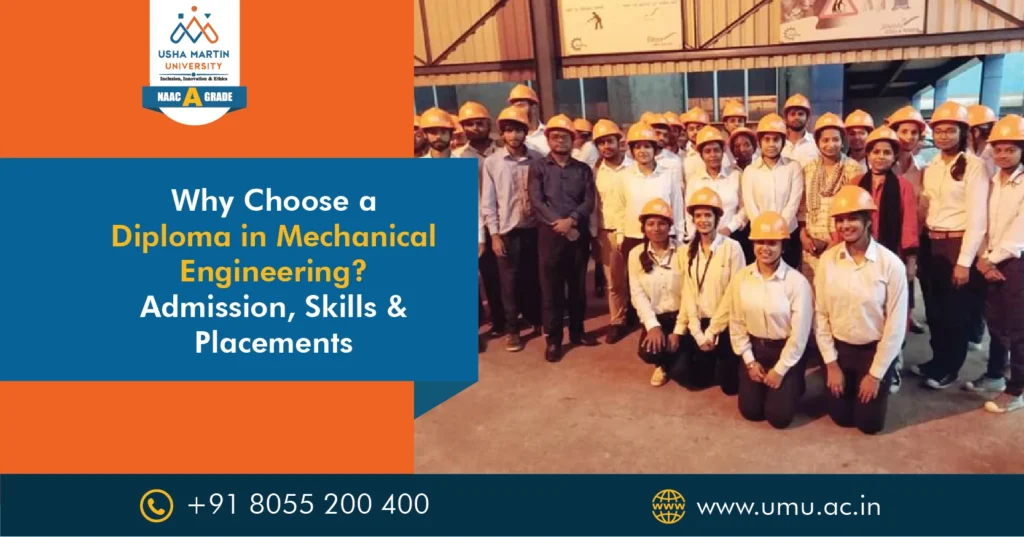
At our university, we are pleased to share that 58 students from our Diploma in Mechanical Engineering and Diploma in Electrical Engineering programmes were successfully selected by Banco Products India Limited for the position of Diploma Engineer Trainee (DET).
The selected students received an annual package of ₹3 LPA, with job locations across India. This recruitment achievement represents an important opportunity for our diploma students to begin their professional journeys with an established engineering and manufacturing company.
The Diploma Engineer Trainee position provides an entry point into industrial work, where students can apply their technical understanding, become familiar with workplace processes and gain professional experience. For students interested in electrical and mechanical engineering, this type of opportunity demonstrates the connection between technical education and industrial employment.
The following table presents the student names and branches available in our shared placement roster. The position and recruiting company are based on the collective placement information.
Students Selected by Banco Products India Limited
| Sl. No. | Student Name | Engineering Branch | Job Position | Recruiting Company |
| 1 | Aditya Kumar | Electrical | Diploma Engineer Trainee | Banco Products India Limited |
| 2 | Danish Kumar Mahto | Mechanical | Diploma Engineer Trainee | Banco Products India Limited |
| 3 | Uditya Kumar Pathak | Electrical | Diploma Engineer Trainee | Banco Products India Limited |
| 4 | Roshan Kumar Munda | Electrical | Diploma Engineer Trainee | Banco Products India Limited |
| 5 | Mohini Munda | Electrical | Diploma Engineer Trainee | Banco Products India Limited |
| 6 | Rupa Kumari | Electrical | Diploma Engineer Trainee | Banco Products India Limited |
| 7 | Shivsagar Kumar | Electrical | Diploma Engineer Trainee | Banco Products India Limited |
| 8 | Gaurav Kumar | Electrical | Diploma Engineer Trainee | Banco Products India Limited |
| 9 | Pradeep Kumar | Electrical | Diploma Engineer Trainee | Banco Products India Limited |
| 10 | Kundan Kushawaha | Mechanical | Diploma Engineer Trainee | Banco Products India Limited |
| 11 | Satish Kumar | Mechanical | Diploma Engineer Trainee | Banco Products India Limited |
| 12 | Karan Kumar Mahto | Electrical | Diploma Engineer Trainee | Banco Products India Limited |
| 13 | Sakshi Kumari | Electrical | Diploma Engineer Trainee | Banco Products India Limited |
| 14 | Piyush Bharti | Mechanical | Diploma Engineer Trainee | Banco Products India Limited |
| 15 | Ankit Kumar Mahto | Mechanical | Diploma Engineer Trainee | Banco Products India Limited |
| 16 | Sumit Mahto | Electrical | Diploma Engineer Trainee | Banco Products India Limited |
| 17 | Wahid Rahman | Electrical | Diploma Engineer Trainee | Banco Products India Limited |
| 18 | Nikhil Kumar Singh | Mechanical | Diploma Engineer Trainee | Banco Products India Limited |
| 19 | Praveen Kumar Pandey | Mechanical | Diploma Engineer Trainee | Banco Products India Limited |
| 20 | Rahul Kumar | Mechanical | Diploma Engineer Trainee | Banco Products India Limited |
| 21 | Naveen Gari | Electrical | Diploma Engineer Trainee | Banco Products India Limited |
| 22 | Ayush Kumar | Electrical | Diploma Engineer Trainee | Banco Products India Limited |
| 23 | Samir Ahmad | Mechanical | Diploma Engineer Trainee | Banco Products India Limited |
| 24 | Piyush Thakur | Electrical | Diploma Engineer Trainee | Banco Products India Limited |
| 25 | Abhijeet Kumar | Electrical | Diploma Engineer Trainee | Banco Products India Limited |
| 26 | Anand Rana | Electrical | Diploma Engineer Trainee | Banco Products India Limited |
| 27 | Ranjit Kumar | Electrical | Diploma Engineer Trainee | Banco Products India Limited |
| 28 | Khirodhar Mahto | Electrical | Diploma Engineer Trainee | Banco Products India Limited |
| 29 | Ankit Mandal | Electrical | Diploma Engineer Trainee | Banco Products India Limited |
| 30 | Sanchay Tiwari | Electrical | Diploma Engineer Trainee | Banco Products India Limited |
| 31 | Prince Kumar | Mechanical | Diploma Engineer Trainee | Banco Products India Limited |
| 32 | Yashraj Paswan | Electrical | Diploma Engineer Trainee | Banco Products India Limited |
| 33 | Ashwani Kumar Raj | Mechanical | Diploma Engineer Trainee | Banco Products India Limited |
| 34 | Rahul Munda | Mechanical | Diploma Engineer Trainee | Banco Products India Limited |
| 35 | Abhishek Mahto | Mechanical | Diploma Engineer Trainee | Banco Products India Limited |
| 36 | Jitendra Bediya | Mechanical | Diploma Engineer Trainee | Banco Products India Limited |
| 37 | Vishal Nag | Electrical | Diploma Engineer Trainee | Banco Products India Limited |
| 38 | Sourabh Das | Mechanical | Diploma Engineer Trainee | Banco Products India Limited |
| 39 | Md Rizwan | Electrical | Diploma Engineer Trainee | Banco Products India Limited |
| 40 | Sandarv Kumar | Electrical | Diploma Engineer Trainee | Banco Products India Limited |
| 41 | Ashok Mahto | Electrical | Diploma Engineer Trainee | Banco Products India Limited |
| 42 | Arun Kumar | Mechanical | Diploma Engineer Trainee | Banco Products India Limited |
| 43 | Romit Kandir | Mechanical | Diploma Engineer Trainee | Banco Products India Limited |
| 44 | Vishwajit Kumar | Electrical | Diploma Engineer Trainee | Banco Products India Limited |
| 45 | Dheeraj Nonia | Not specified | Diploma Engineer Trainee | Banco Products India Limited |
This achievement is an encouraging example of how we want our students to approach their professional goals. We believe that technical education, practical understanding and consistent preparation can help students become more confident when they enter recruitment processes.
How We Help You Prepare for Career Opportunities
At our university, we recognise that placement preparation should not begin only when you reach the final semester. It should develop throughout your academic journey. We encourage you to strengthen your subject knowledge, participate in practical activities and understand how your technical learning connects with workplace responsibilities.
Our approach includes opportunities for technical training, practical projects, workshops, industry interactions and interview preparation. We also encourage you to improve your communication and presentation skills because professional success involves the ability to work with people and communicate technical information effectively.
When you participate in projects and laboratory activities, you gain examples that you can discuss during interviews. For instance, explaining how you completed a practical assignment, understood an electrical circuit or approached a technical problem can help demonstrate your knowledge.
We also encourage you to prepare a clear résumé that highlights your academic qualifications, technical skills, projects and relevant training. A strong understanding of your subjects, combined with a responsible attitude towards work, can help you make a positive impression during recruitment.
Future Scope of Electrical Engineering in India
India’s growing infrastructure, manufacturing activities and energy requirements make electrical engineering an important technical field. Electricity supports industrial production, transportation, commercial establishments, residential buildings and public infrastructure. As these sectors develop, the need for reliable electrical systems, equipment and maintenance becomes increasingly important.
Renewable energy is another area creating new technical requirements. Solar power plants, wind energy projects and energy storage systems depend on electrical components, power conversion equipment, control systems and distribution infrastructure. The expansion of such projects creates opportunities to develop specialised knowledge in electrical installation, testing and maintenance.
Manufacturing companies also depend on electrical machines, motors, generators and automated systems. These components support production operations and require regular inspection and maintenance. Students who develop a sound understanding of electrical equipment can explore opportunities in this sector as they gain experience.
For you, this means that electrical engineering offers several possible career directions. You can begin with an entry-level technical position, gain industrial experience and gradually develop specialised skills. You can also continue your education to expand your academic and professional opportunities.
Diploma Electrical Engineering Admission at Our University
If you have completed Class 10 and want to enter the engineering field, you can explore diploma electrical engineering admission at our university in Ranchi.
Our regular Diploma in Electrical and Electronics Engineering programme has a duration of three years and is intended for candidates who have passed the Matriculation examination from a recognised board. We also provide a lateral-entry pathway for eligible candidates who meet the prescribed educational requirements.
To begin the admission process, you should first understand the programme structure and eligibility conditions. You can then complete the application with the required academic and personal details and submit the necessary documents, including your Class 10 marksheet, certificates, identity proof and photographs, as applicable.
We encourage you to provide accurate information during the application process and complete the admission formalities according to the instructions for the relevant academic session. Reviewing the current fee structure, eligibility requirements and admission schedule will help you understand the process clearly.
Higher Education Opportunities After a Diploma
Your diploma can be the beginning of a longer academic journey. After completing the programme, you can explore employment or consider continuing your education. Eligible diploma holders may apply for lateral entry into relevant BTech programmes, subject to the admission rules and eligibility requirements of the institution.
You can also strengthen your technical abilities through specialised training in industrial automation, electrical maintenance, power electronics, renewable energy and electrical testing. These areas can help you understand specific technologies and develop practical knowledge related to your career interests.
We encourage you to think about your long-term goals while choosing your next step. Some students may prefer to begin working and gain industrial experience, while others may want to pursue higher education immediately. Both pathways can support your professional development when they match your interests and academic preparation.
Begin Your Engineering Journey with Our University
Choosing the right diploma engineering programme can help you build a strong foundation for your professional future. If you are interested in electricity, machines, technical applications and practical problem-solving, a Diploma in Electrical and Electronics Engineering can give you the opportunity to develop these interests into useful skills.
At our university, we want you to learn with confidence, understand engineering concepts through practical experience and prepare for opportunities in the professional world. Our students’ selection by Banco Products India Limited is one example of the career pathways that diploma students can explore.
Take the next step towards your ambitions by exploring our Diploma in Electrical and Electronics Engineering programme. Develop your technical knowledge, make the most of your practical learning experience and work towards building a career in the engineering sector.
Learn with Purpose. Develop Technical Skills. Build Your Future with Our University!
Frequently Asked Questions
Q1: What is the diploma EEE full form?
The diploma EEE full form is Diploma in Electrical and Electronics Engineering. The programme combines electrical engineering fundamentals with electronics-related subjects, including electrical machines, circuits, electronic systems and power applications.
Q2: Can I pursue a Diploma in Electrical Engineering after Class 10?
Yes, you can pursue a regular diploma programme after completing Class 10 from a recognised board, subject to the applicable admission requirements. Our regular Diploma in Electrical and Electronics Engineering programme is three years long.
Q3: What is the duration of the diploma course?
Our regular Diploma in Electrical and Electronics Engineering programme has a duration of three years. Eligible candidates may also explore the lateral-entry route, which has a different duration and admission requirements.
Q4: What jobs can I explore after completing the diploma?
After completing the programme, you can explore positions such as Electrical Technician, Diploma Engineer Trainee, Maintenance Technician, Junior Electrical Engineer and Electrical Service Technician. The available opportunities depend on the employer’s requirements, your skills and your experience.
Q5: What are the placement opportunities after a diploma?
You can explore employment opportunities in manufacturing, power generation, electrical equipment production, construction, infrastructure and renewable energy. Our recent recruitment achievement includes 58 students from the Mechanical and Electrical diploma branches selected by Banco Products India Limited for Diploma Engineer Trainee positions at an annual package of ₹3 LPA.
Q6: Can I pursue B.Tech after completing a diploma?
Yes, eligible diploma holders can explore lateral-entry admission into B.Tech programmes. Admission depends on the relevant university’s eligibility requirements and applicable regulations.