What is B.Sc Respiratory Technology (BRT)? Full Form, Eligibility & Career Scope
June 7, 2026
BA-LLB Integrated Programme Admission 2026: Everything You Need to Know
June 12, 2026
Choosing the right university for your B.Sc. Agriculture degree is one of the most important decisions for your future. While course curriculum, infrastructure, and facilities matter, nothing is more valuable than hearing directly from students who are already studying there. Their experiences help you understand what campus life, academics, practical training, and career development are really like.
At Usha Martin University, Ranchi, B.Sc. Agriculture students consistently share positive experiences about the university’s practical learning environment, supportive faculty, research opportunities, and field exposure. The university focuses on helping students learn beyond textbooks and develop the skills needed for successful careers in agriculture and allied sectors.
What Students Say About the Learning Environment
Many students describe the Agriculture Department as a place where learning goes beyond traditional classroom teaching. Rather than simply attending lectures, students actively participate in discussions, practical sessions, research projects, and field activities.
Students appreciate that they are encouraged to think independently, ask questions, and explore agricultural concepts in depth. The learning environment helps them develop confidence and prepares them for real-world agricultural challenges.
One of the students, Anjali Mishra, a second-year B.Sc. An agriculture student shares that the department promotes a collaborative research culture where students are treated as active learners rather than passive listeners.
According to her, students are encouraged to learn beyond the classroom and explore practical aspects of agriculture through hands-on experiences and field-based learning.
Practical Learning That Builds Real Skills
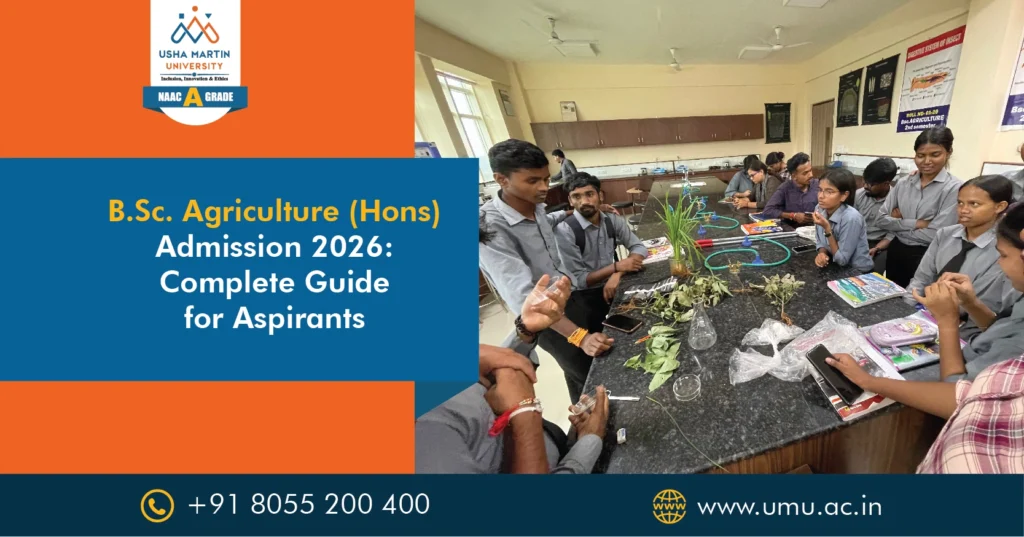
A common theme in student testimonials is the university’s strong focus on practical learning. Agriculture is a field that cannot be mastered through theory alone. Students need practical exposure to understand farming techniques, crop production, soil management, and agricultural technologies.
Students regularly participate in:
- Laboratory experiments
- Soil testing activities
- Plant identification exercises
- Agricultural demonstrations
- Greenhouse training
- Crop observation studies
These practical sessions help students understand how agricultural science is applied in real situations. Many students mention that performing experiments and observing results firsthand makes learning more interesting and effective.
The university’s practical approach ensures that students graduate with industry-relevant skills and confidence.
Research Opportunities for Agriculture Students
Modern agriculture depends heavily on research and innovation. Students at Usha Martin University appreciate the opportunities they receive to participate in research-based activities from the early stages of their academic journey.
The university provides access to advanced learning facilities, including greenhouses and research-oriented environments where students can observe scientific agricultural practices.
Students gain exposure to:
- Crop research
- Soil analysis
- Plant growth studies
- Agricultural innovation projects
- Sustainable farming techniques
Many students believe that these research opportunities help them develop analytical thinking and problem-solving skills that are highly valuable in professional careers.
Greenhouse and Advanced Agriculture Facilities
Students frequently mention the university’s greenhouse facilities as one of the highlights of their learning experience.
These facilities serve as active learning and research environments where students can observe plant growth, conduct experiments, and understand modern agricultural techniques.
The greenhouse exposure helps students understand the following:
- Controlled farming environments
- Crop management techniques
- Plant health monitoring
- Agricultural research practices
Such facilities allow students to connect classroom concepts with practical agricultural applications.
Village Visits and Community Learning Experiences
One of the most appreciated aspects of the BSc. Agriculture program is its emphasis on community engagement and field exposure.
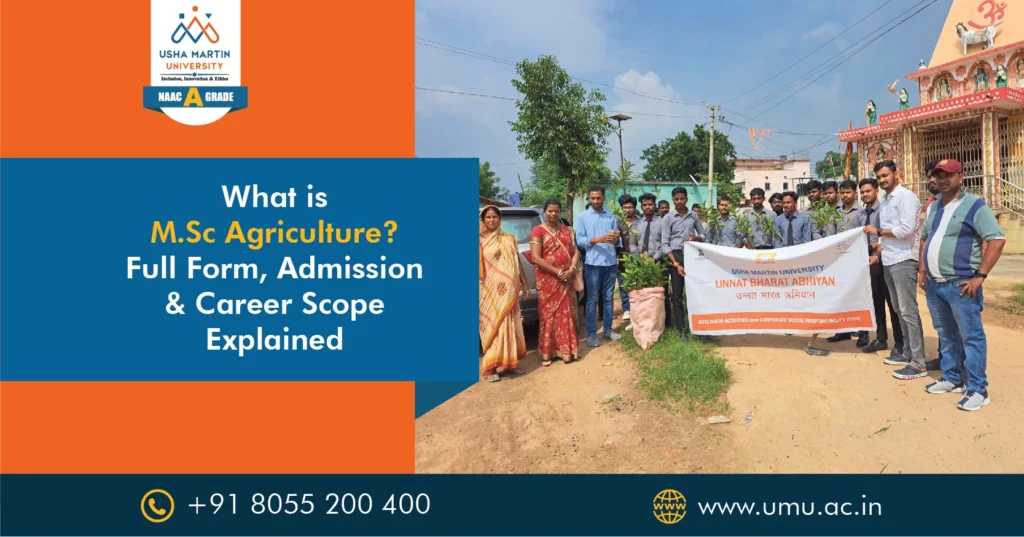
Students regularly participate in village visits and agricultural outreach activities. These experiences help them understand the realities of farming and interact directly with rural communities.
According to student feedback, these visits provide valuable opportunities to observe agricultural practices, understand farmer challenges, and explore practical solutions.
Students often mention that these activities help them develop communication skills, empathy, and a deeper understanding of agriculture’s role in society.
The experience of learning directly from farming communities adds significant value to their academic journey.
Laboratory Experience and Hands-On Training
Laboratory learning forms an important part of the B.Sc. Agriculture program at Usha Martin University.
Students receive practical training in various areas, including:
- Soil analysis
- Plant pathology
- Seed testing
- Microbial culture preparation
- Agricultural biotechnology basics
- Crop science experiments
Students appreciate the opportunity to perform experiments themselves rather than simply observing demonstrations.
This hands-on approach helps them understand scientific concepts more effectively and prepares them for future careers in agriculture and research.
Exposure Through Krishi Vigyan Kendra Visits
Students also highlight the value of regular visits to Krishi Vigyan Kendras (KVKs) and agricultural demonstration centers.
These visits help students:
- Observe modern agricultural practices
- Learn about government agricultural initiatives
- Understand crop management techniques
- Explore innovative farming methods
- Interact with agricultural experts
Students feel that these visits strengthen their practical understanding and connect academic learning with real-world agricultural challenges.
The exposure gained through these activities enhances both knowledge and confidence.
Faculty Support and Guidance
One of the most frequently mentioned strengths of the university is its supportive faculty.
Students describe faculty members as approachable, experienced, and committed to student success. They appreciate the guidance provided during practical sessions, research activities, and project work.
Faculty members encourage students to participate in seminars, workshops, competitions, and agricultural events that contribute to overall development.
Many students believe that the mentorship they receive helps them achieve both academic and career goals.
Career Preparation and Skill Development
Students also appreciate the university’s focus on career readiness.
The B.Sc. Agriculture program is designed not only to provide academic knowledge but also to develop professional skills required in the agriculture industry.
Students gain exposure to:
- Communication skills
- Problem-solving abilities
- Leadership development
- Agricultural entrepreneurship
- Research methodologies
- Industry practices
This comprehensive approach helps students prepare for careers in agriculture, agribusiness, research, government services, and rural development sectors.
Why Students Recommend Usha Martin University
Based on student reviews and testimonials, several factors make Usha Martin University a preferred choice for agriculture education:
- Industry-Oriented Curriculum: Students learn concepts that are relevant to modern agricultural practices and industry requirements.
- Practical Exposure: Extensive fieldwork, laboratory sessions, and village visits help students develop real-world skills.
- Research Culture: Students are encouraged to participate in research activities and innovation projects.
- Experienced Faculty: Dedicated faculty members provide academic support and professional guidance.
- Modern Facilities: Laboratories, greenhouses, and practical learning resources enhance the educational experience.
- Career Development Opportunities: The university supports students through skill development programs and career guidance initiatives.
- Student Experience in One Sentence: If there is one common message that emerges from student testimonials, it is that Usha Martin University provides an environment where students can learn, explore, grow, and prepare themselves for successful careers in agriculture.
Students consistently emphasize that the university helps them move beyond theoretical learning and develop the practical knowledge, confidence, and skills needed to face real agricultural challenges.
Conclusion
The experiences shared by B.Sc. Agriculture students reflect the university’s commitment to quality education, practical learning, and student development. Through research opportunities, laboratory training, greenhouse exposure, village outreach programs, field visits, and faculty mentorship, students gain a well-rounded educational experience.
For students seeking an agriculture program that combines academic excellence with practical exposure, Usha Martin University offers an environment where learning extends far beyond the classroom. The positive reviews and testimonials demonstrate how the university is helping future agriculture professionals build successful careers while contributing to the growth and development of the agricultural sector.